
Managing Emergency Roof Leaks During Severe Storms
When a sudden severe storm rolls through the Ottawa region, the heavy wind and driving rain can put your home's exterior to the ultimate test. Discovering water dripping from your ceiling in the middle of a downpour is one of the most stressful experiences a homeowner can face. Unpredictable weather is a hallmark of our climate, and knowing how to handle an unexpected leak can mean the difference between a quick fix and extensive structural damage to your home.
While your first instinct might be to panic or rush out to fix the problem yourself, safety and strategy must come first. At Roof Medix, we understand the urgency and anxiety that come with sudden water intrusion. Our goal is to empower you with the knowledge to protect your property and family until professional help arrives. In this guide, we will walk you through the essential emergency roof leak repair steps, how to mitigate interior damage safely, and when to call in the experts.
How to Mitigate Active Roof Leaks Indoors
The moment you notice water staining your drywall or dripping onto the floor, your immediate priority should be minimizing the interior damage. Do not attempt to go outside and climb onto your roof during an active storm. High winds, slippery shingles, and potential lightning make this incredibly dangerous. Instead, focus your efforts inside.
Start by moving valuables, electronics, and furniture away from the affected area. If the water is dripping near light fixtures or electrical outlets, head to your breaker panel and turn off the hydro to that specific room to prevent electrical hazards. Next, place a large bucket or a heavy-duty plastic bin directly under the leak to catch the incoming water. If the water is splashing out of the container, try pinning a piece of string to the ceiling right where the water is pooling; this will give the water a direct path to slide down the string and into the bucket, reducing messy splashes.
If you notice the ceiling drywall bulging or holding a pocket of water, it is actually safer to puncture a small hole in the center of the bulge with a screwdriver. While it may feel counterintuitive to put a hole in your ceiling, doing so allows the water to drain evenly into your bucket, preventing the ceiling from collapsing under the immense weight of pooled water.
Identifying Storm Damage on Residential Shingles
Once the severe weather has passed and it is entirely safe to go outside, you can begin a preliminary assessment of the situation from the ground. A pair of binoculars can be incredibly helpful for identifying storm damage on residential shingles without ever leaving the safety of your lawn.
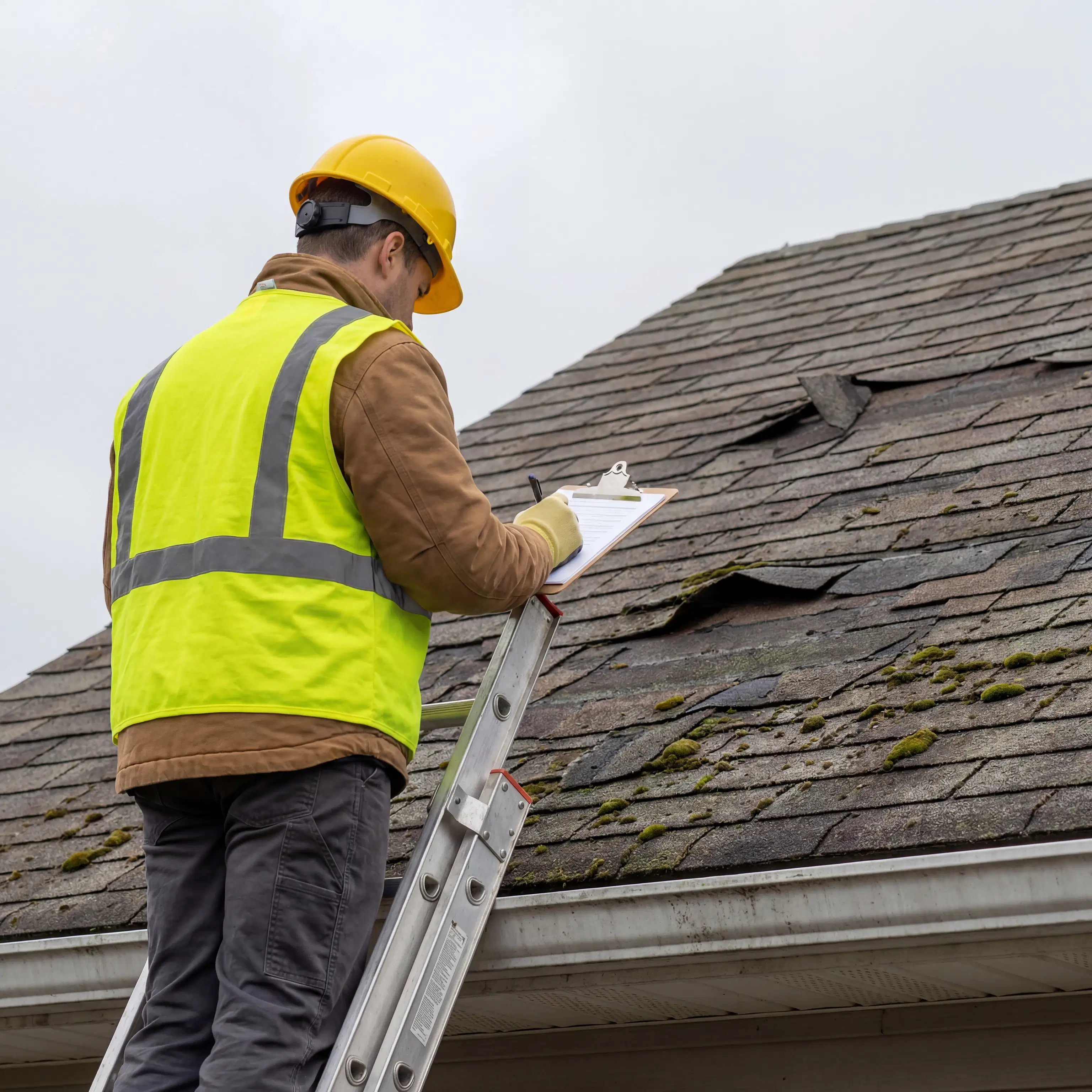
Look for obvious signs of trouble, such as completely missing shingles, bent flashing around chimneys and vents, or excessive granule loss that has washed down into your eavestroughs. High winds can sometimes lift shingles just enough to break the sealant bond without entirely tearing them off, which creates an invisible pathway for water. You might also spot fallen tree branches that have punctured the decking.
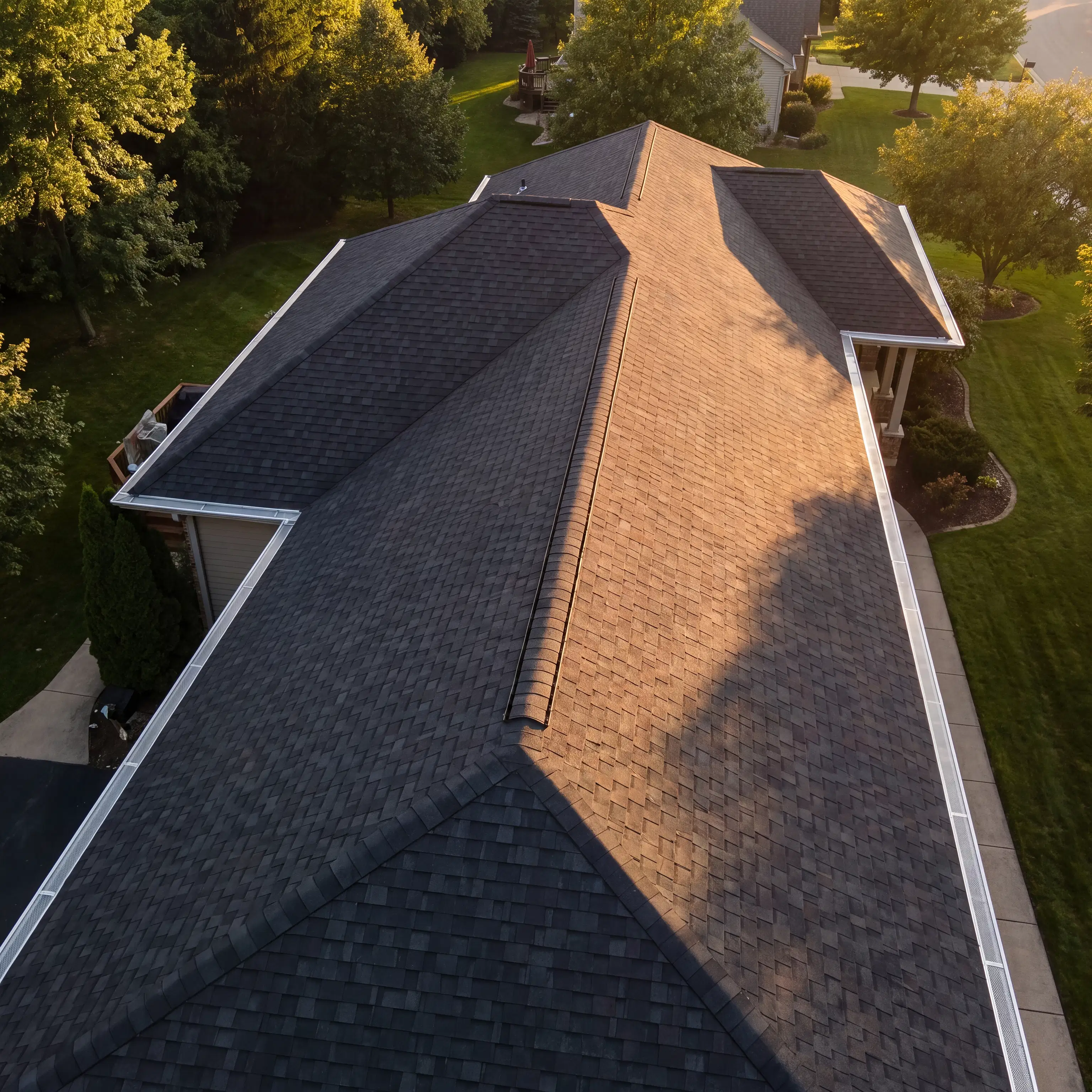
However, ground-level visual inspections have their limits. That is why modern roofing professionals rely heavily on advanced technology. Using high-resolution drones for aerial inspections allows us to safely and accurately assess every square inch of your roof. This technology eliminates the immediate need to walk on a potentially compromised structure, ensuring accurate project estimations while keeping safety the absolute top priority.
Why Professional Emergency Roofing Matters
After a major weather event, neighborhoods are frequently canvassed by 'storm chasers'—out-of-town contractors offering quick, unusually cheap fixes. Unfortunately, these operators often lack the proper WSIB compliance, provincial safety training, and liability insurance required to protect you. Hiring an uninsured worker puts you at immense financial risk if an accident occurs on your property. Furthermore, rushed work often lacks the workmanship warranties necessary to give you long-term peace of mind.
Homeowners often ask us: Can a roof be repaired during the winter months or right after a freezing storm? The answer is absolutely yes. Legitimate, locally established companies have the specialized materials and training to execute emergency roofing repairs safely in harsh weather. Whether it involves temporarily tarping the damaged section to stop water intrusion or using specialized cold-weather sealants, a true professional will stabilize your home and provide a transparent, detailed estimate for a permanent fix once conditions allow.
When evaluating quotes, always verify the contractor's credentials. A reliable team will prioritize clear communication, outline exactly what materials they are using, and explain the difference between their workmanship warranty and the manufacturer's coverage. Proper licensing and a strong local reputation are your best defenses against shoddy craftsmanship.
Securing Your Home for the Future
Managing an unexpected leak requires a calm approach, focusing on indoor mitigation first and leaving the complex exterior work to properly equipped professionals. Taking swift action not only protects your interior walls and flooring but also prevents long-term issues like mold growth and compromised insulation.
If your home has recently suffered storm damage, or if you want to ensure your current system is ready for the next severe weather event, Roof Medix is here to help our neighbors in Nepean and beyond. From critical roof repair and restorative roof rejuvenation to complete re-roof services, our licensed and fully insured team delivers peace of mind when you need it most. Protect your biggest investment by reaching out to us through our contact page to schedule a thorough, professional inspection today.